A New Chapter for Hope College in Downtown Holland
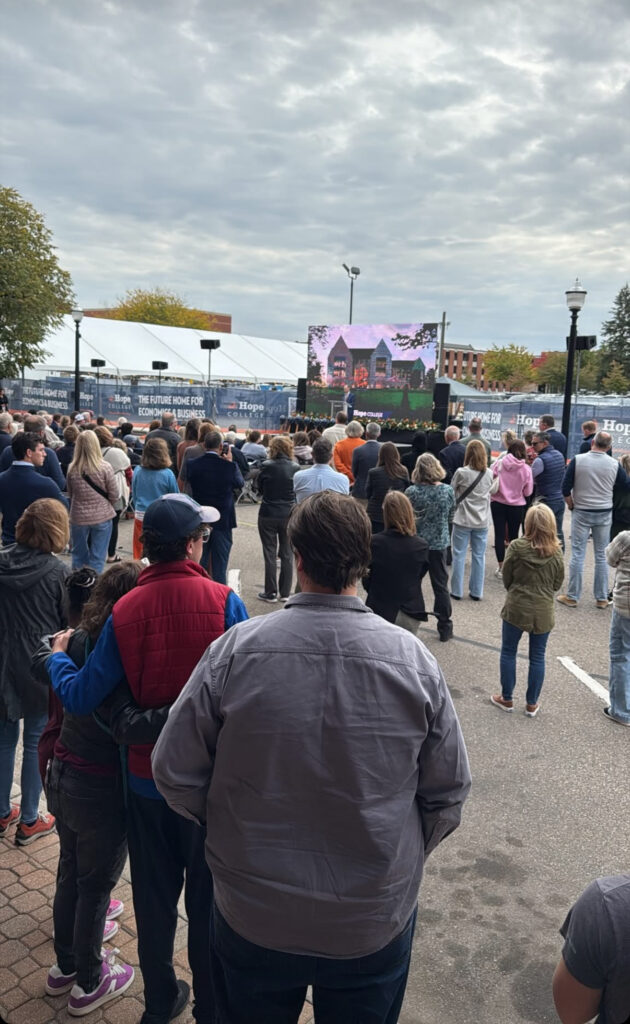
Yesterday I headed down to downtown Holland for the groundbreaking ceremony of Hope College’s new academic building on East 8th Street. With homecoming weekend in full swing, there was a vibrant energy in the air — alumni, students, faculty, and local supporters all came together to celebrate what this new structure means for Hope and the Holland community.
Groundbreaking and What It Means
The new building – a 74,000-square-foot, three-story facility – will serve the Department of Economics & Business and act as a connective hub between Hope’s campus and downtown Holland. hope.edu+2hope.edu+2 It sits on the site of the former Versendaal car-dealership building and will front East 8th Street between College and Columbia Avenues. hope.edu+1
Why this matters:
The Business/Economics department is one of Hope’s largest and fastest-growing academic areas — many students are engaging with business and economics programs. hope.edu+1
Locating this facility in downtown Holland tightens the college’s connection with the city, bolstering the sense that Hope is of the community, not just adjacent to it. (This is in keeping with Hope’s historic role in Holland.) Second Wave+1
The construction signals investment in tomorrow: classrooms, collaboration spaces, outreach with the business community, innovation — all with a downtown backdrop that invites engagement beyond campus.
For me, standing among the crowd yesterday, the enthusiasm from locals and alumni was palpable. There was a sense of pride — that this institution is continuing to grow, and that it’s not just for students, but for Holland at large.
A Bit of Hope College History
To appreciate this moment fully, it helps to know where Hope has come from:
Hope College officially received its charter in 1866, but its roots go further back: in October 1851 the Pioneer School was established to serve the new Holland colony founded by Dutch immigrants. hope.edu+1
The founder, Albertus C. Van Raalte, led the Dutch settlers in West Michigan and believed in the importance of education grounded in Christian character. The college’s motto, Spera in Deo (“Hope in God”), and its anchor emblem reflect his vision. Wikipedia+1
Over the decades, Hope and the city of Holland have grown in tandem — the college being embedded in downtown Holland’s fabric, rather than isolated. Second Wave+1
One example of historic campus architecture: Van Vleck Hall (built 1858) is among the oldest buildings, originally housing students, library, classes and chapel. HMDB+1
So yesterday’s groundbreaking feels like another chapter in a long story — one where Hope continues to innovate while honoring its mission and its relationship with the city of Holland.
Why This New Building is a Big Deal
Here are a few key points worth highlighting for your readers:
Academic growth & relevance: Business and economics are increasingly sought after fields; giving them a dedicated, modern space reflects the institution’s responsiveness to student demand and to the evolving workforce.
Community synergy: By placing the new building downtown, the college signals that the city matters — that downtown Holland is not just the backdrop for student life, but full partner in what comes next.
Physical gateway: The building acts as a “north campus gateway” that links the college’s heart with the commercial downtown — enhancing walkability, connectivity, visibility. hope.edu+1
Legacy & future: For alumni and Holland residents, this is a visible mark of institutional growth. For current and future students, it’s a sign that they’ll be part of a vibrant, evolving community with strong ties to the business world.
Timing with homecoming: Linking the event to homecoming weekend amplifies community spirit — returning alumni, current students, and local stakeholders all converged, underscoring how Hope remains central to Holland’s identity.
Reflecting on the Day
As I stood amid the crowd of students, faculty, alumni and locals, what struck me most was the shared excitement. There was no sense of the college being separate — instead, it felt like the entire city was cheering on the next step for Hope College. It reminded me that these tours I lead — through history, the city, community spaces — are about more than just buildings or facts; they’re about people, purpose, and place.
If you’re in town and walk down East 8th Street toward the campus, keep an eye on this new building’s development. It’s more than bricks and mortar: it’s a statement of purpose, of connection, and of vision.